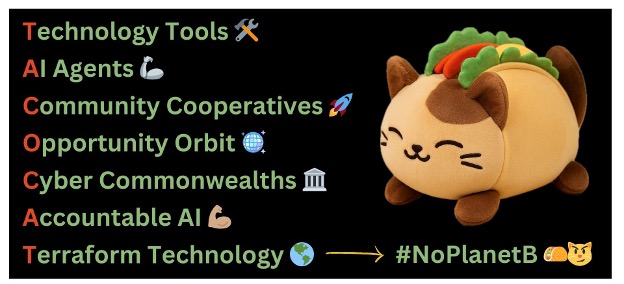
TACOCAT:
journey to human-centric AI
How did I end up teaching AI to middle schoolers? I asked myself that question many times.
I trace this back to my work as a senior leader in the Obama administration, developing ways to connect schools, families, and communities. Through twists and turns, this led me to working with leading educators in Washington, D.C. on pathways for learning augmented by technology. Teachers latched onto the belief that when young people own their learning stories, they build a positive sense of identity and take ownership of learning.
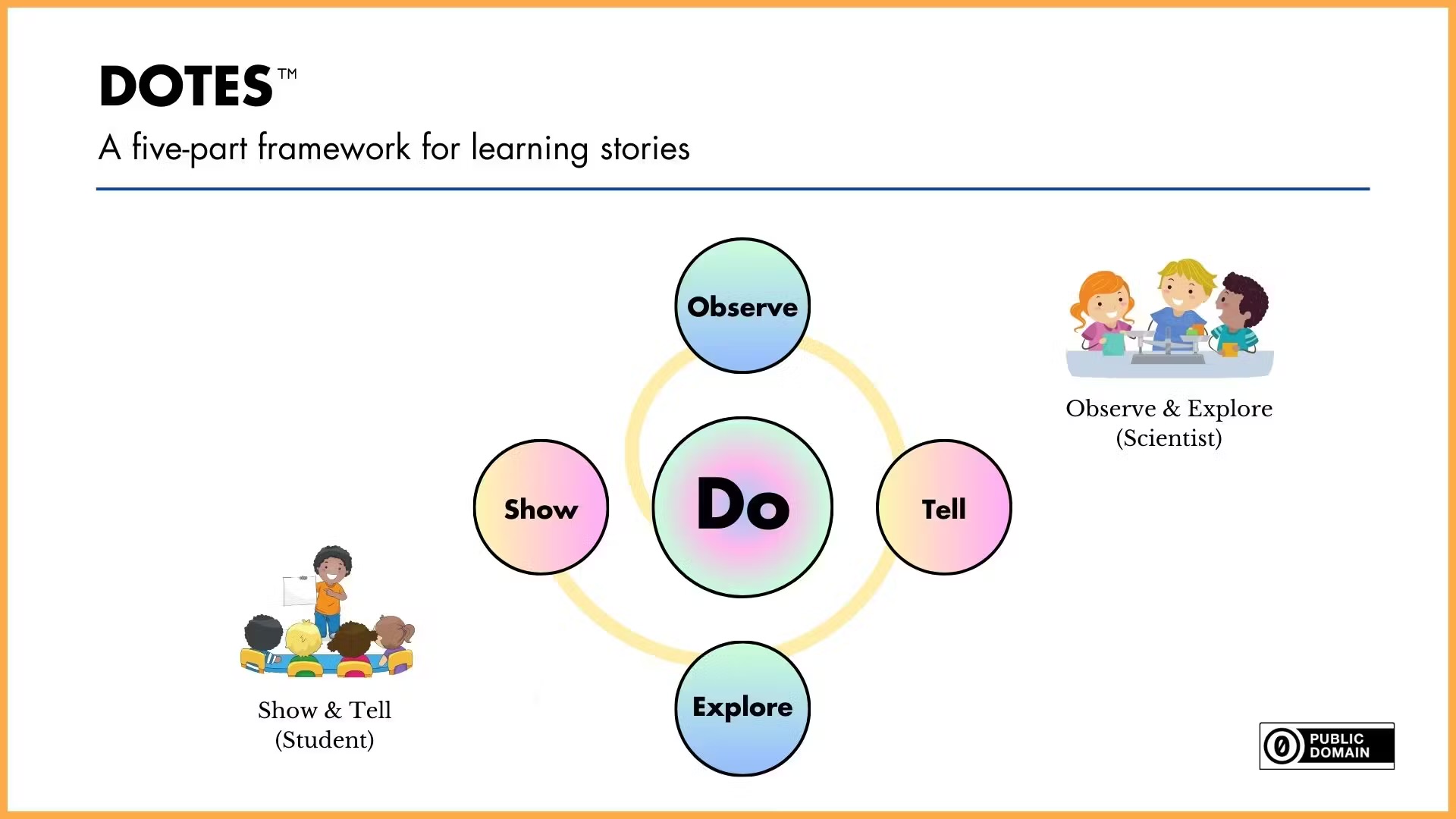
I developed a framework for learning stories called DOTES; inspired by my storytelling performances at The Moth and my intensive history working on experiential education. Dotes begin with stories of what you did and learned. The S and T in Dotes stand for show and tell—the earliest way we share our stories. The O and E in Dotes stand for observe and explore: your personal insights about what happened and what you want to do next. It's our inner scientist. We do things, learn from experience and the stories of others.
I discovered that when we put even a few Dotes in a spreadsheet, we can remix them with AI to tell our story of learning for school, work, and life. Stories are basic building blocks for representation, belonging, and governance: Who am I? Who are you? Who are we together?
In early 2023, before ChatGPT had hit the headlines and become common conversation, I asked the middle school educators I was working with if I could introduce it to a group of their students. I had ChatGPT write a story using their first names about a group of teens from their school taking command of a rogue AI superintelligence that had gone haywire. They gasped out loud as the first result scrolled up my laptop screen. I achieved the impossible: impress middle schoolers.
"Wouldn't it be better if you controlled the information that went in here, so the story it told about you was true?" I asked. "So we can have our own AI?" said Camila, a 7th grader. "Yes," I answered. The students responded: We want that.
And this is how I ended up teaching a four-month elective class on AI to thirteen fifth–eighth graders called AI Club.
Fall 2023: the first school year with ChatGPT. Or, as the teachers quickly nicknamed it, CheatGPT.
The students learned quickly where things were headed: We can't believe what we see on the web. If we have AI do the work, then we're not learning. AI is going to make jobs disappear. How are we going to make a living?
A few weeks into class, the situation was grim. Teachers were fixated on how students were using AI to cheat on assignments, while students saw that Big AI was going to cheat them out of their future.
One day, a fifth-grade student stayed after class, visibly upset. "Are you okay, Henry?" I asked. "I think I want to go live in the woods," he said. We're going to get through this, I told him. He was close to tears. "There's a pathway to get control of AI—and we're going to get through this."
That weekend, I invented TACOCAT, a seven-part pathway for how to take charge of AI and make it work for us. I also brought in our newest class mascot: a TACOCAT plushie that greeted the students each day for the rest of the semester.
At the end of the semester, I asked them what I should do differently if I taught the class again. They said, "Start with TACOCAT."